![[personal profile]](https://www.dreamwidth.org/img/silk/identity/user.png)
A Witch's Field Guide to Agrippa
Mar. 21st, 2025 11:01 amA Witch's Field Guide to Agrippa
Heinrich Cornelius Agrippa’s Three Books of Occult Philosophy (TBOP) are often cited as foundational texts of Western magical praxis. All practitioners in the West are encouraged to read them. Many do. Most don’t.
The texts are dated, obscure, and frankly a chore to read. Nothing in TBOP is straightforward. They’re a puzzle—one you’re meant to solve your own way. The FAQ below offers my perspective on common misconceptions and complaints about these texts.
Q: What’s the short version of this?
The cosmos is laced with an intricate web of hyper-dimensional connections (Agrippa calls them “virtues”). Magic is the art of discovering and exploiting those connections to perform miracles. These connections span multiple layers of reality: material (natural), spatiotemporal (celestial), and abstract (divine).
Q: What’s with all the Bible shit?
Agrippa is a prolific plagiarist. Most of TBOP is direct quotes from other sources. While he comes off as a devout Catholic, that was probably more about getting his work past the Inquisition than actual religious fervor. His preferences lean more toward the aesthetics and structure of Roman ritual than any modern Evangelical nonsense.
Early on, Agrippa tells you to read the books in order, front to back. He also says most people will miss the point. Each chapter combines quotes from multiple sources to gesture at a hidden lesson. So when you hit the Bible quotes, try thinking:
- Why is Agrippa telling me this here? What’s the broader context of this chapter?
- How would I read this if I assumed Christians are just the inheritors of a misappropriated Solar cult?
- Why does Agrippa name-drop Zeus or Jove right next to these quotes?
- What happens if I treat the word “God” as code for the Tao, the Universal Purpose, the Answer to Every Question, the Universal Wave Function, or just “the Universe”?
- How would my interpretation of Hebrew scripture change if I assume that Yahweh is a patricidal maniac that murdered the rest of the Canaanite pantheon? Maybe these passages were originally about other gods, and were later rewritten.
Q: What’s with the long lists of weird ingredients?
Agrippa assumes you’ll connect the dots. I don’t treat these as basic lists of correspondences. I treat them as an attempt to distill abstract magical concepts into something demonstrative—stuff you can pick up and poke.
When I hit a list, I ask:
- What do these things have in common?
- Is there something that doesn’t fit? Why is it here?
It’s less cookbook, more Rorschach test.
Q: I’m not interested in philosophy.
At the time Agrippa was writing, philosophy, science, and magic weren’t separate fields—they were all mashed together under “Natural Philosophy,” the great-grandmother of modern physics.
“Occult Philosophy” is just the weird, hidden sibling. If Agrippa published today, he might’ve called it Paranormal Physics or Supernatural Mechanics. You probably already know that “occult” means “hidden” or “obscured” (literally occluded). So “Occult Philosophy” is just the study of hidden knowledge—unobvious, encoded, privileged.
If you don’t like philosophy, cool. But you’re still doing it every time you cast a spell or design a ritual. You're just doing it badly if you don’t know the theory behind it.
Q: I just want to summon demons.
Cool. Book 3, Chapter 33. The threes are a hint. Agrippa loves his number games. I’m pretty sure he was deep in gematria.
Q: I just want to ascend.
Book 3, Chapter 36. More number games. Again with the hint.
Q: I just want to cast spells.
There are tools for spellcasting all over TBOP, but nothing’s spoon-fed. The big idea is this: things that share some kind of attribute have influence over each other.
Shared virtues (attributes) could include:
- Similar appearance, smell, taste, sound, or texture
- Physical proximity or contact
- Being created at the same time or under similar conditions
- Being influenced by specific environmental, emotional, or mental states
Timing matters too. Objects take on the attributes of the time they were created. (Dawn = increase, noon = illumination, dusk = decrease, midnight = occlusion.) Abstract attributes also count—letters, numbers, symbols, sigils, seals, deities, concepts.
The endgame? Integration with the One Attribute that rules all things. Call it the Tao, God, the Universal Wave Function—whatever works for you.
Q: Can I just use the pictures and diagrams?
Sure. But like the ingredient lists, the seals, sigils, and characters are just visual ways to express hidden connections. They’re shorthand for big ideas. Use them, but know why you're using them if you want them to actually do anything.
Q: What does Agrippa mean by “superstition”?
Basically? Being extra. Let’s say you’re doing a bean spell. You could grab a random-ass bean from your pantry. Or… you could use a bean from a plant you grew yourself, from ritually consecrated seeds, under a waning moon, harvested after a month of offerings, and blessed in cedar smoke during a six-hour invocation to Aesculapius.
Agrippa’s take? More is more is more effective. “Superstition” is fastidiousness. It’s dedication. It’s ritual performance as signal amplification.
Q: Why does Agrippa want me to learn astrology?
What he really wants you to learn is a system of magical physics. Astrology isn’t just about your birth chart or Mercury being in retrograde—it's a symbolic framework that lets you categorize and manipulate reality.
Think of it as the user interface for hyper-dimensional alchemy.
Traditional astrology (emphasis on not modern astrology) is self-contained and internally consistent. It gives you a language to describe energy, influence, timing, and interaction. You don’t have to believe in it like a religion—you just have to learn how to use it.
Q: WTF is a symbolic framework?
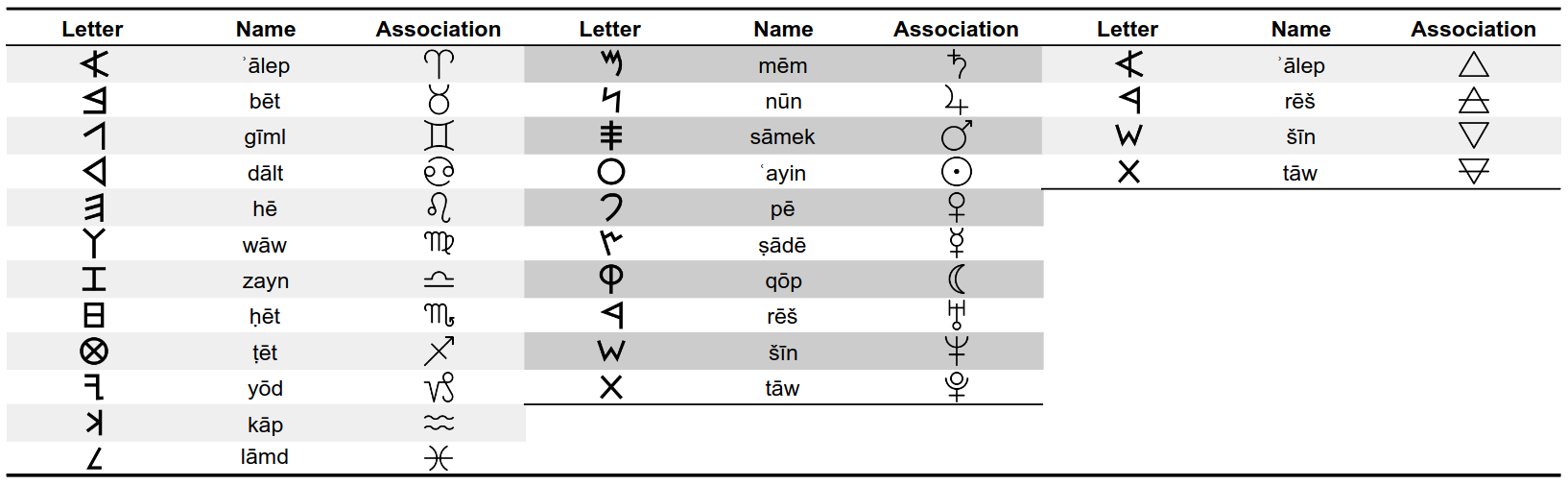
It’s code. Astrology is basically a high-level metaphor machine. Each component is a stand-in for universal concepts.
Here’s the breakdown:
- The four essential qualities define two spectrums:
- Hot (expansive) ↔ Cold (contractive)
- Wet (flexible) ↔ Dry (rigid)
- These are ideal forms—not something you find in the raw.
- The four elements are combinations of those qualities:
- Fire: hot + dry = unyielding expansion
- Air: hot + wet = flexible expansion
- Water: cold + wet = flexible contraction
- Earth: cold + dry = rigid contraction
Reality isn’t “made of” these elements. They describe how it behaves. That’s why the manifest world is called a “soup.” Everything is a swirl of elemental blends.
- The 7 classical planets represent processes or forces. Think of them as conceptual waves moving through the soup:
- Terra – Stability, creation
- Luna – Perception, reflection
- Mercury – Transmission, movement
- Venus – Inspiration, desire
- Sol – Generation, vitality
- Mars – Action, conflict
- Jupiter – Cultivation, growth
- Saturn – Transformation, limitation
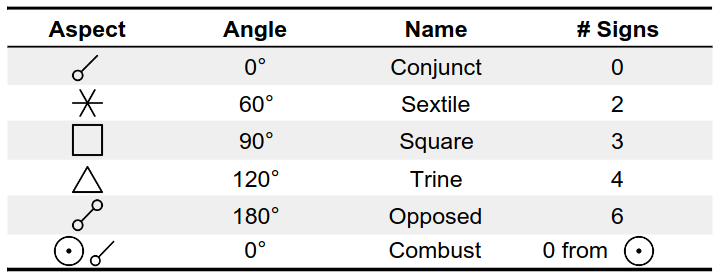
- Zodiac signs describe the terrain these forces are moving through. A planet in its sign of rulership is riding a wave. In exile? It’s stuck in a ditch. Aspects (angles between planets) describe how their waves interact—amplify, cancel out, or clash.
Final Thoughts
Agrippa doesn’t hand you answers—he hands you a maze. Three Books of Occult Philosophy isn’t a manual, it’s a cipher. It’s frustrating, brilliant, tedious, and completely worth it if you’re willing to meet it on its own terms.
If you want to get anything out of it, you need to make a pact with the text. Not necessarily a blood pact (unless that’s your thing), but a commitment to engage with it as a living, breathing initiatory process. Read it like a witch, not a scholar. Follow the threads. Ask better questions. Make your own damn map.
And when you get lost—and you will—that’s not failure. That’s part of the spell working.
Ianvs